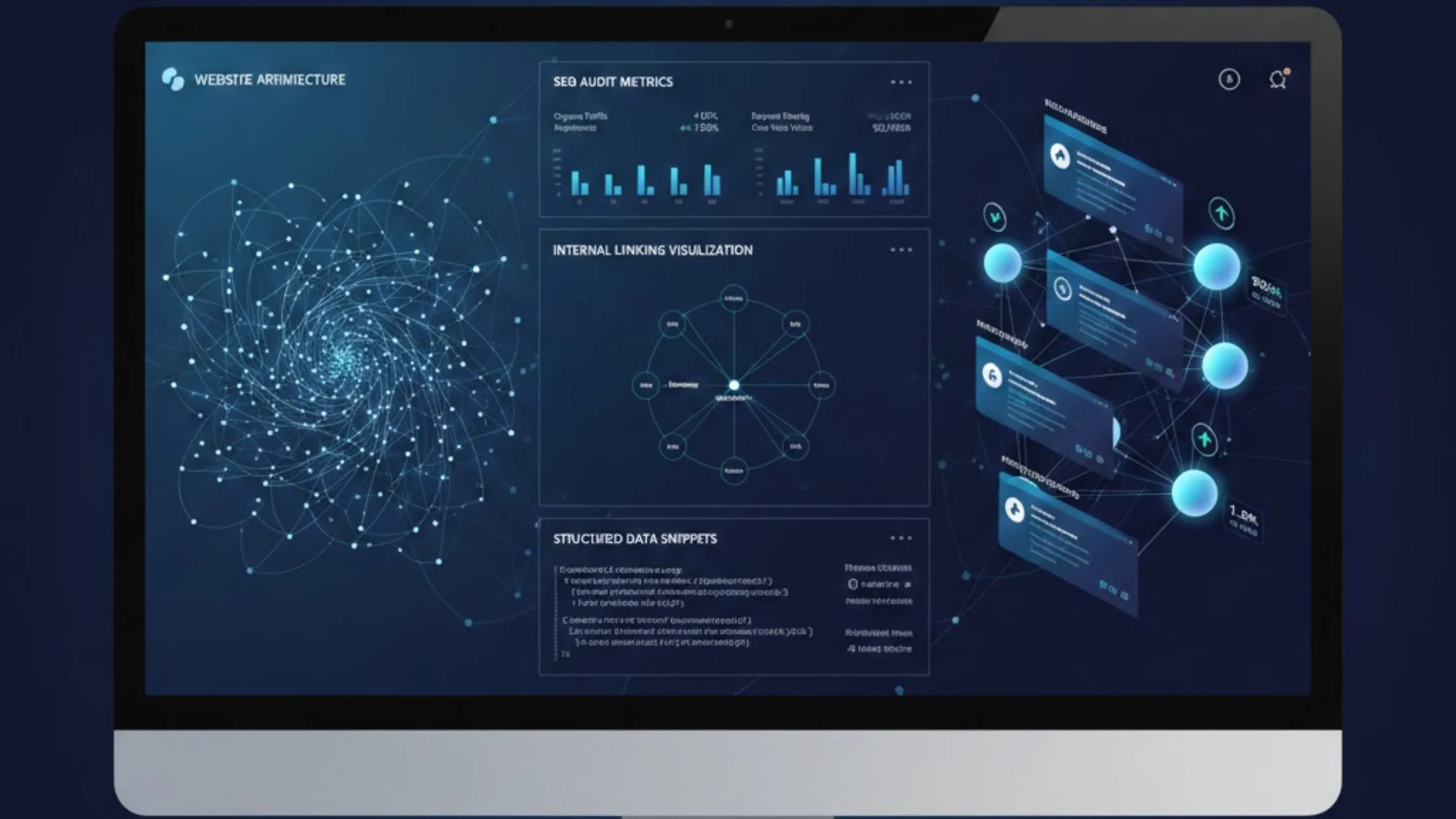
On-page SEO used to be slow, manual, and inconsistent. You’d research keywords in one tool, analyze competitors in another, build internal links by hand, and hope you didn’t miss something important.
AI changed that—but only if it’s implemented correctly.
This guide breaks down how to use AI for on-page SEO using the OTTO SEO Tool, with a clear focus on headings, keywords, FAQs, and internal linking. More importantly, it shows how businesses actually implement this at scale using SEO OTTO Implementer Services, not just theory.
If you want results instead of dashboards, this is for you.
What On-Page SEO Looks Like in 2026
Modern on-page SEO isn’t about checking boxes. Google now evaluates pages based on:
- Topic depth and relevance
- Clear semantic structure
- Alignment with search intent
- Internal link context
- Content freshness and updates
Trying to manage all of this manually across dozens—or hundreds—of pages simply doesn’t scale.
That’s where OTTO comes in.
Why Generic AI Isn’t Enough for On-Page SEO
Many marketers say they “use AI for SEO,” but what they really mean is:
- Generating content drafts
- Spinning outlines
- Guessing keyword placement
That approach creates volume, not rankings.
To properly understand how to use AI for on-page SEO, you need a system that:
- Reads SERPs, not just prompts
- Understands topical relationships
- Automates implementation, not just analysis
This is exactly what the OTTO SEO Tool was built to do.
Step 1: Keyword Research Using OTTO SEO Tool
Every strong page starts with keyword clarity.
With OTTO, keyword research goes beyond search volume. The platform analyzes:
- Ranking pages for your target query
- Semantic keyword patterns
- Content depth benchmarks
- User intent signals
For this page, the primary focus keyword is:
how to use ai for on-page seo
OTTO automatically identifies closely related variations such as:
- how to use ai for on page seo
- ai on-page seo optimization
- ai tools for on-page seo
Instead of guessing which LSI keywords to include, OTTO shows you what Google already rewards.
This eliminates over-optimization and under-coverage at the same time.
Step 2: Creating SEO-Driven Headings with OTTO
Headings are one of the most misunderstood parts of on-page SEO.
Most people either:
- Overstuff keywords into headings
- Or write vague headings that don’t rank
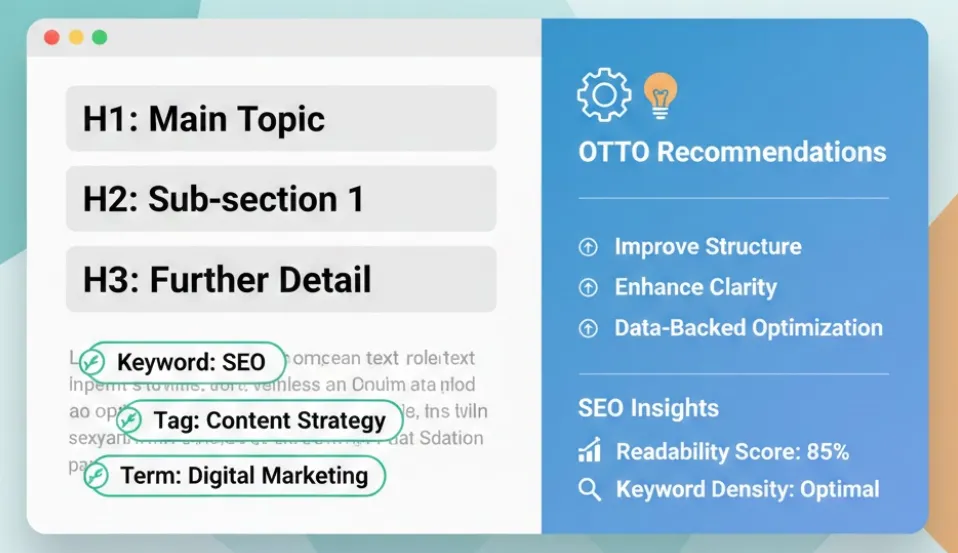
OTTO solves this by analyzing the heading structure of top-performing pages and mapping patterns that actually work.
How OTTO Optimizes Heading Structure
Using OTTO, you can:
- Identify missing H2s and H3s
- See which subtopics competitors cover
- Align headings with real search intent
Instead of guessing, your page structure is built on proven SERP data.
This is a practical example of how to use AI for on page SEO—not by replacing thinking, but by eliminating blind spots.
Step 3: Building Topical Authority with OTTO
Ranking a single page is easier than ranking consistently.
That’s where topical authority seo becomes critical.
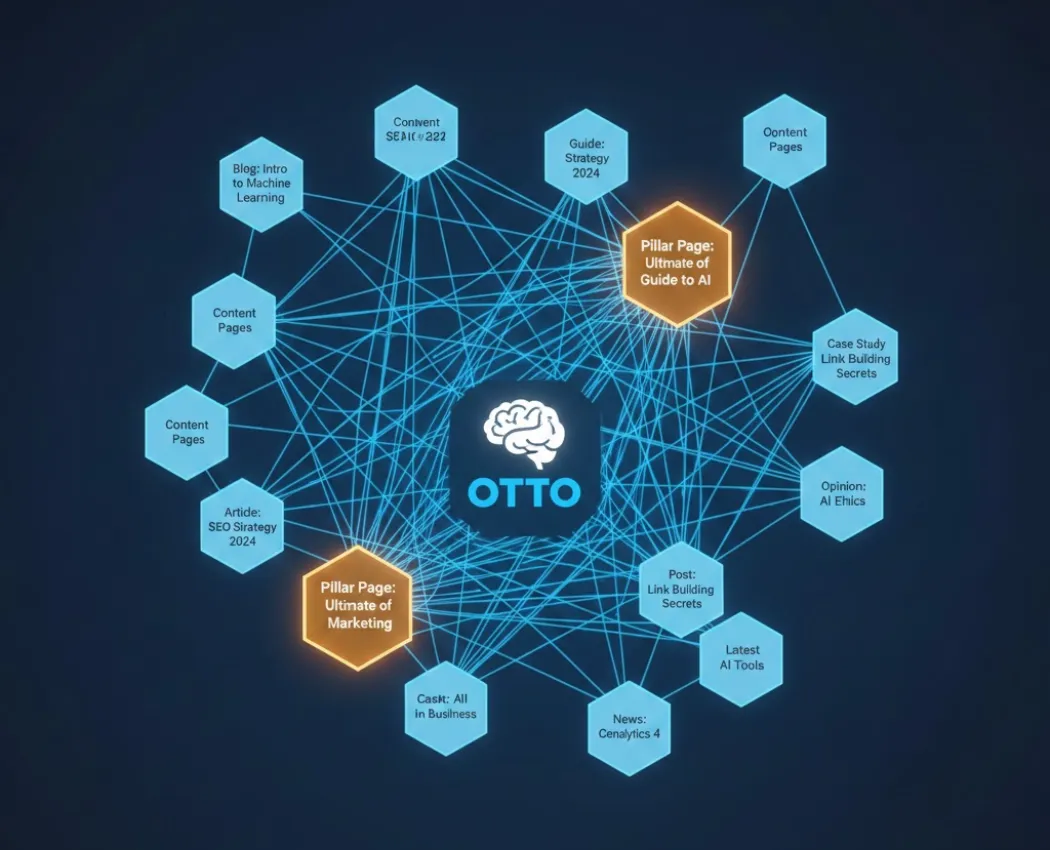
OTTO doesn’t just optimize one URL—it maps topic clusters across your site, showing:
- Which pages support each other
- Where internal links should exist
- Which topics need deeper coverage
This ensures your content works together as a system, not isolated blog posts.
Why Topical Authority Matters More Than Keywords
Google increasingly ranks sites that demonstrate expertise across a topic—not just a single keyword.
OTTO helps you:
- Expand content coverage intelligently
- Avoid cannibalization
- Strengthen internal relevance signals
This is how brands move from ranking “sometimes” to ranking consistently.
Step 4: Writing and Optimizing Content with OTTO Insights
OTTO doesn’t write content for you—and that’s a good thing.
Instead, it provides:
- Content depth recommendations
- Semantic term suggestions
- Section-level optimization insights
This allows writers to focus on clarity and usefulness while OTTO ensures the content aligns with ranking factors.
The result is content that:
- Sounds human
- Reads naturally
- Still performs in search
Step 5: FAQ Optimization Using OTTO
FAQs are one of the easiest on-page SEO wins—when done correctly.
OTTO identifies:
- People Also Ask questions
- Long-tail query variations
- Featured snippet opportunities
You can then add FAQs that directly match how users search, not how marketers guess.
Example OTTO-Optimized FAQ
How do you use AI for on-page SEO?
AI tools like OTTO analyze top-ranking pages, identify keyword patterns, optimize headings, recommend internal links, and surface FAQ opportunities based on real search data.
These sections improve:
- SERP visibility
- Page relevance
- User engagement
Step 6: Internal Linking Automation with OTTO
Internal linking is one of the most powerful—and underused—on-page SEO levers.
OTTO automates this by:
- Scanning your entire site
- Identifying contextual link opportunities
- Preventing over-linking
- Strengthening topic clusters
This is especially effective when linking to strategic pages such as:
- what is search atlas ai seo software
- topical authority seo
- SEO OTTO implementer Services
Instead of random links, every connection supports a ranking goal.
Step 7: Implementing On-Page SEO at Scale with SEO OTTO Implementer Services
Tools are only as good as their implementation.
Many businesses buy SEO software and never fully use it. That’s why SEO OTTO Implementer Services exist.
With implementation services, OTTO is:
- Properly configured for your site structure
- Integrated into your content workflow
- Actively monitored and optimized
This turns OTTO from a tool into an execution engine.
Who Needs SEO OTTO Implementer Services?
These services are ideal for:
- Agencies managing multiple clients
- SaaS companies with large content libraries
- eCommerce brands with hundreds of category pages
- Businesses serious about scalable SEO growth
Instead of learning everything yourself, implementation experts handle the setup and optimization.
Step 8: Continuous Optimization and Content Refreshing
On-page SEO isn’t static.
OTTO continuously monitors:
- Ranking changes
- Keyword decay
- SERP shifts
- Content gaps
This allows pages to be updated proactively instead of reactively.
That’s a major advantage over manual SEO workflows.
Common Mistakes When Using AI for On-Page SEO
Even with OTTO, mistakes happen when expectations are wrong.
Avoid:
- Publishing without human review
- Ignoring user intent
- Over-optimizing headings
- Treating AI as a shortcut instead of a system
OTTO works best when paired with strategy and editorial judgment.
Final Thoughts: The Right Way to Use AI for On-Page SEO
The real lesson here is simple:
AI doesn’t replace SEO expertise—it amplifies it.
If you want to understand how to use AI for on-page SEO, the answer isn’t generic content generators. It’s structured systems like OTTO that:
- Analyze real SERPs
- Optimize intelligently
- Scale execution
- Support topical authority
- Strengthen internal linking
Whether you’re exploring what is search atlas ai seo software, building topical authority seo, or implementing changes through SEO OTTO Implementer Services, the goal is the same:
Smarter optimization. Fewer guesses. Better rankings.